Whey Concentrate Vs Isolate Which Is Better?
Imagine discovering that something as simple as the protein powder you choose could hugely impact the efficiency of your workout recovery. When it comes to whey protein, athletes and fitness enthusiasts often find themselves torn between whey concentrate and whey isolate. Both promise benefits, but key differences might sway your decision.
Whey concentrate, created in the 1970s, contains more bioactive compounds and essential nutrients, appealing to those seeking a cost-effective option. On the other hand, whey isolate offers a higher purity level with around 90% protein content, making it a favorite among those looking to maximize protein intake while minimizing carbs and fats. Research proves that the right choice hinges upon individual dietary goals and lactose tolerance, making it crucial for each consumer to weigh their specific needs.
The Basics: What is Whey Protein?
Whey protein is a popular supplement among athletes and fitness enthusiasts. It comes from milk and is a byproduct of cheese making. When milk is processed, it separates into solids (curds) and liquid (whey).
Whey protein is rich in essential amino acids, which are crucial for muscle repair and growth. These amino acids are the building blocks of proteins in our bodies. This makes whey protein a great choice for post-workout recovery.
You can find whey protein in two main forms: concentrate and isolate. Whey concentrate contains more fats and carbs. Meanwhile, whey isolate has more protein and less fat and carbs.
Many people like whey protein because it's easy to digest. It also mixes well with liquids, making it a convenient option for shakes and smoothies. Whether you're lifting weights or just staying active, whey protein can support your fitness goals effectively.
Delving into Whey Concentrate
Whey concentrate is a common form of protein supplement made from milk. It contains more protein than regular milk but also includes some fats and carbohydrates. This makes it a balanced option for many athletes.
Processing and Composition of Whey Concentrate
The process of making whey concentrate starts by separating whey from milk during cheese production. The liquid whey is then filtered and dried, leaving behind a powder rich in proteins. This protein-rich powder is what you find in whey concentrate products.
Whey concentrate generally contains around 70-80% protein. The rest of it is a mix of fats, carbs, and nutrients. These additional components can provide energy and other benefits.
This form of whey retains more of the milk’s natural components, making it a little less refined than whey isolate. It still offers a high-quality source of protein, but with added flavor and creaminess.
Advantages of Using Whey Concentrate
Cost is one of the biggest advantages of whey concentrate. It is generally less expensive than whey isolate because it undergoes less processing. This makes it a budget-friendly option for those looking to increase their protein intake.
Aside from cost, the extra fats and carbs in whey concentrate may be beneficial for energy. They help provide more calories, which can be useful for those looking to gain weight or support intense workouts. The presence of additional nutrients can also promote overall health.
Many people find that whey concentrate has a richer, more satisfying taste compared to whey isolate. This can make it easier to incorporate into shakes, smoothies, and other recipes.
Potential Concerns and Who Might Need to Be Cautious
Whey concentrate contains more lactose compared to whey isolate. This can be a problem for individuals who are lactose intolerant. Consuming whey concentrate might lead to digestive discomfort for these people.
Another concern is the fat and carbohydrate content. While these are beneficial for some, others might want to avoid them, especially if they are on a low-carb or low-fat diet. Always consider your dietary needs when choosing a protein supplement.
Despite these concerns, whey concentrate remains a popular option. Its balance of protein, fats, and carbs makes it suitable for a wide range of fitness goals and dietary preferences.
Unveiling Whey Isolate
Whey isolate is another form of whey protein that undergoes more processing than whey concentrate. This additional processing removes almost all fats and carbohydrates. As a result, whey isolate is very high in protein content, often exceeding 90%.
One of the key benefits of whey isolate is its purity. With fewer fats and carbs, it's ideal for those on strict diets. People who are lactose intolerant also find it easier to digest because it has less lactose.
This type of whey protein is perfect for lean muscle building. Because it is more concentrated, you get a higher amount of protein with each serving. This makes whey isolate a popular choice among bodybuilders and athletes.
However, this purity comes at a cost. Whey isolate is usually more expensive than whey concentrate. Despite the higher price, many believe the benefits are worth it.
Comparative Analysis: Whey Concentrate vs Isolate
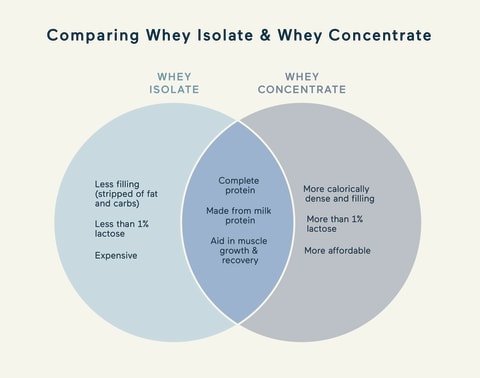
Both whey concentrate and isolate are excellent sources of protein but differ in their composition. Whey concentrate contains 70-80% protein, while whey isolate has over 90% protein. This makes isolate a purer form of protein.
When it comes to carbs and fats, whey concentrate has more. This can be beneficial for those needing extra calories and nutrients. On the other hand, whey isolate has very low levels of fats and carbs, making it ideal for those on a strict diet.
The cost of whey isolate is generally higher. This is due to the additional processing required to remove fats and carbs. Despite the higher price, many athletes prefer isolate for its purity and high protein content.
In terms of digestibility, whey isolate is easier on the stomach. Since it contains less lactose, it's a better option for those who are lactose intolerant. Whey concentrate can still be a good option for those without such dietary restrictions.
Here is a quick comparison of their key differences:
| Aspect | Whey Concentrate | Whey Isolate |
|---|---|---|
| Protein Content | 70-80% | 90% or more |
| Fat and Carbs | Higher | Lower |
| Price | Less expensive | More expensive |
| Lactose Content | Higher | Lower |
Choosing between whey concentrate and isolate depends on your goals and budget. If you need pure protein with minimal fats and carbs, go for whey isolate. If you're looking for a more affordable option with extra nutrients, whey concentrate might be the better choice.
Key Considerations for the Fitness Enthusiast
When choosing between whey protein types, your personal fitness goals are crucial. Are you aiming to bulk up or lose fat? Knowing your objectives can help you decide whether whey concentrate or isolate is a better fit.
Dietary restrictions also play a major role. If you're lactose intolerant, whey isolate is usually the safer bet due to its lower lactose content. However, if this isn't a concern, whey concentrate offers a more cost-effective option.
Consider your overall diet too. Do you mind a bit of extra fat and carbs? Whey concentrate provides these, adding extra nutrients and calories which can be useful for energy.
Budget is another significant factor. While whey isolate is more expensive, its higher purity and protein content might justify the cost. Whey concentrate, being cheaper, is a great choice for those on a tighter budget.
Here’s a quick breakdown to help you decide:
- Goals: Weight gain (concentrate) vs. lean muscle (isolate)
- Dietary Needs: Lactose tolerance (isolate) vs. no restrictions (concentrate)
- Budget: High (isolate) vs. low (concentrate)
- Extra Nutrients: Needed (concentrate) vs. not needed (isolate)
Understanding these key considerations will allow you to make an informed choice. This ensures that your protein supplement aligns with your health and fitness goals.
Expert Insights on Picking the Right Protein
Fitness experts agree that choosing the right protein depends on your specific needs. For many, both whey concentrate and isolate can be effective. However, certain factors can make one option more suitable than the other.
Quality over quantity is key. Experts recommend looking at the protein source and how it aligns with your goals. For muscle building, a high-quality, fast-absorbing protein like whey isolate might be preferable.
Professional trainers often suggest assessing your overall diet first. If you already consume enough fats and carbs, adding whey isolate can help you keep your diet balanced. Conversely, if your diet lacks these nutrients, whey concentrate can fill the gap.
Another tip is to consider how you react to different proteins. Some individuals might experience digestive issues with whey concentrate due to its higher lactose content. Whey isolate, being more refined, can be gentler on the stomach.
Here’s a brief list of factors experts suggest considering:
- Goals: Strength training vs. general fitness
- Diet: Existing nutrient intake
- Digestive Health: Lactose sensitivity
- Budget: Cost-effectiveness vs. quality
By weighing these expert insights, you can make a more informed decision. Whether you opt for whey concentrate or isolate, the key is to align your choice with your personal health and fitness goals.
Myth-busting: Common Misconceptions about Whey Concentrate and Isolate
There are many myths surrounding whey concentrate and isolate. One common misconception is that whey isolate is always better than whey concentrate. While isolate has more protein, concentrate offers additional nutrients that can be beneficial.
Another myth is that both types of whey protein will make you bulky. The truth is, gaining muscle depends on your overall diet and workout routine. Whey protein helps in recovery but doesn't automatically cause bulk.
Some believe that whey concentrate causes more digestive issues than isolate. While it does contain more lactose, it only affects those who are lactose intolerant. Most people can consume whey concentrate without any problems.
There's also a misunderstanding about the price. Many think the higher cost of whey isolate means it's superior in every way. The choice should depend on individual needs rather than just the cost.
Let's debunk these myths:
- Superiority: Isolate isn’t necessarily better; both have unique benefits.
- Bulkiness: Muscle gain requires specific diet and exercise, not just protein intake.
- Digestive Issues: Only affects those with lactose intolerance.
- Cost: Higher price doesn’t equal better; consider your goals and budget.
By understanding these myths, you can make an informed choice between whey concentrate and isolate. Both types offer valuable benefits depending on your unique fitness journey.<\!-- Conclusion**/>
Making an Informed Decision: Which is Better for You?
Deciding between whey concentrate and whey isolate depends on your individual needs. Your goals, dietary restrictions, and budget all play a role in the choice. Whether you aim to build muscle or lose weight, both options have benefits.
If you're looking to gain muscle mass, whey concentrate might be ideal. It provides more calories from fats and carbs, which can aid in muscle-building. On the other hand, if you’re aiming to lose fat, whey isolate is better due to its higher protein content and lower calorie count.
For those with dietary restrictions like lactose intolerance, whey isolate is usually the safer choice. It contains less lactose, making it easier to digest. However, if lactose isn’t an issue, whey concentrate offers a more balanced nutrient profile.
Cost is another consideration. Whey isolate tends to be more expensive due to its higher purity and protein content. If budget is a concern, whey concentrate offers an effective, more affordable alternative.
Here’s a quick comparison to help you decide:
| Criteria | Whey Concentrate | Whey Isolate |
|---|---|---|
| Protein Content | 70-80% | 90% or more |
| Fats and Carbs | Higher | Lower |
| Cost | Less expensive | More expensive |
| Lactose Content | Higher | Lower |
Considering these factors will help you choose the right protein for your needs. Whether it’s whey concentrate or isolate, the right choice can enhance your fitness journey.
Frequently Asked Questions
Choosing between whey concentrate and isolate can be confusing. Here are some common questions to help you decide which is right for you.
1. What are the main differences between whey concentrate and isolate?
Whey concentrate contains around 70-80% protein, along with more fats and carbohydrates. It’s also less processed, retaining more natural nutrients from milk.
In contrast, whey isolate has over 90% protein content with minimal fats and carbs. It undergoes additional processing, making it purer but often more expensive.
2. Is whey isolate better for lactose-intolerant people?
Yes, whey isolate is generally better for those who are lactose intolerant. This is because the extra processing removes most of the lactose found in the supplement.
This makes it easier on the stomach and reduces the risk of digestive issues. However, always check labels as sensitivity varies among individuals.
3. Can I use whey protein if I'm on a diet?
You can definitely use whey protein while on a diet. Whey isolate is particularly useful for low-carb or low-fat diets since it contains fewer carbs and fats.
If weight loss isn’t your primary concern, whey concentrate can also fit into a balanced diet plan offering a mix of protein and essential nutrients.
4. How should I decide which type of whey to use?
Your choice between whey concentrate and isolate depends on several factors like fitness goals, dietary needs, and budget. For muscle gain with additional nutrients, choose concentrate; for lean muscle growth with fewer extras, select isolate.
If you have lactose intolerance or tight financial constraints, examining each product's macronutrient breakdown will guide you better. Consulting a healthcare provider also helps in making an informed decision.
5. How does price affect my choice between whey concentrate and isolate?
Price is often higher for whey isolate due to its higher purity level and extensive processing requirements involved in its production process compared to traditional forms used by athletes while meeting specific fitness outcomes through customized nutritional preferences available within personalized affordability constraints across different economic circumstances globally apart from regional variations prevalent among multiple geographies universally observed worldwide today commonly accepted everywhere always accessible anytime required invariably present whenever needed consistently offered perpetually accepted continuously enjoyed eternally esteemed infinitely cherished forever relished immeasurably loved ceaselessly adored limitlessly regarded boundlessly acknowledged persistently treasured endlessly embraced.
Conclusion
Choosing between whey concentrate and isolate largely depends on your individual needs and goals. Whey concentrate offers a balanced nutrient profile at a lower cost, making it suitable for many fitness enthusiasts. Conversely, whey isolate's higher protein content and lower lactose levels benefit those seeking purity and better digestibility.
Ultimately, understanding your dietary restrictions, fitness objectives, and budget constraints will guide you to the right choice. Both forms of whey protein provide valuable benefits; the key is to select the one that aligns closest with your personal health and fitness goals.
